
Why Regular Grease Trap Cleaning Malaysia Is Crucial for Your Business
January 5, 2026
Effective Sewage Treatment Plant Maintenance Malaysia for Long-Term Success
February 5, 2026
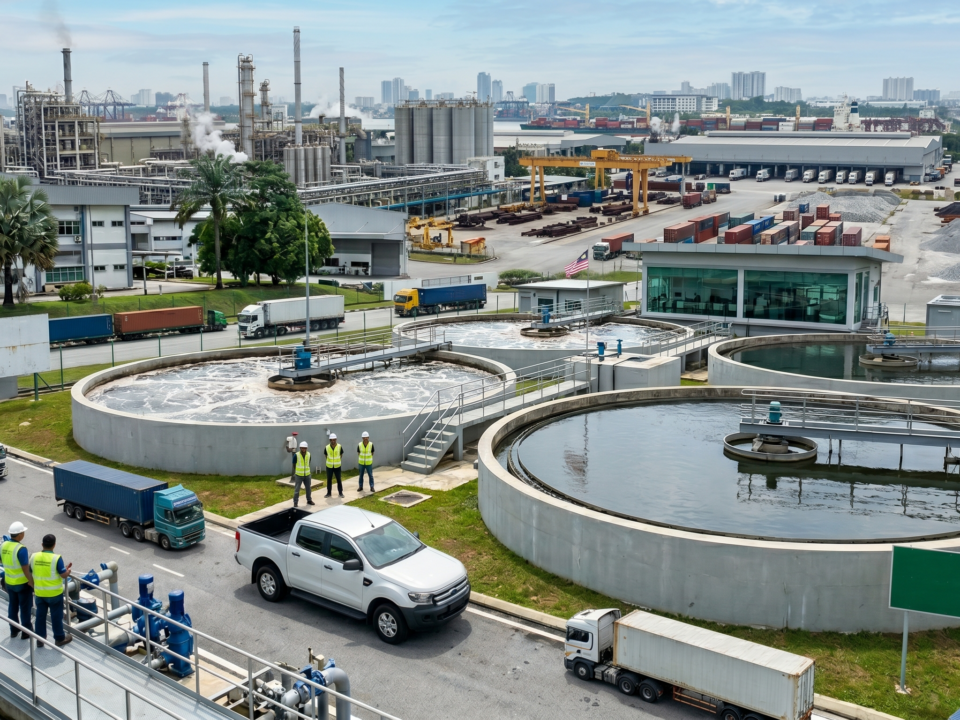
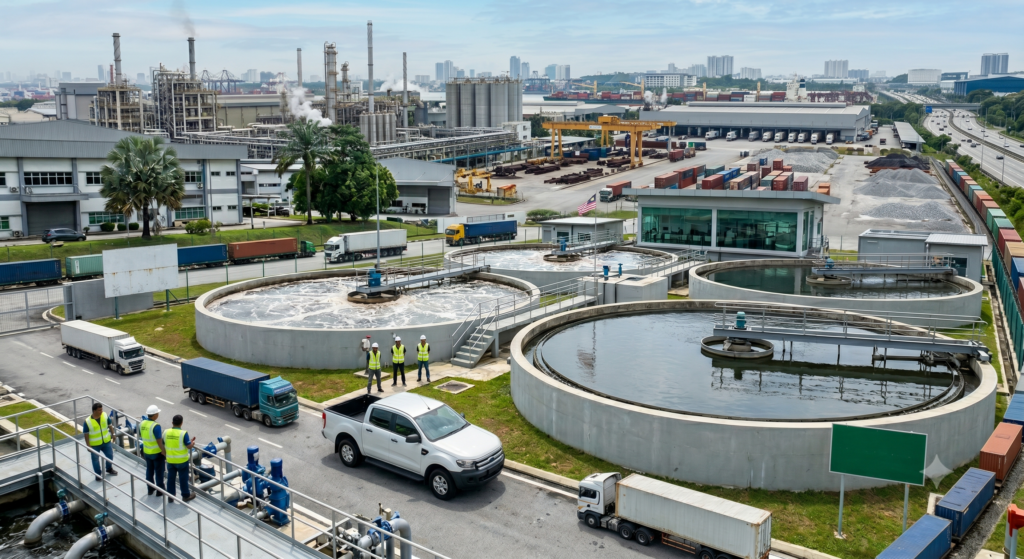
From the earliest urban settlements to the sprawling mega-cities of today, managing wastewater has always been one of civilisation’s quiet but essential tasks. In Malaysia’s evolving landscape of industry, population growth and environmental awareness, the role of the sewage treatment plant in Malaysia becomes central to both public health and ecological protection.
The Critical Role of a Sewage Treatment Plant in Malaysia
When urban and industrial effluent enters our waterways untreated, the risks are clear: contamination of rivers and coastal waters, threats to drinking-water supplies, and broader damage to aquatic ecosystems. In Malaysia, all major sewage systems must meet the regulatory framework laid down by the Department of Environment Malaysia (DOE) under the Environmental Quality (Sewage) Regulations 2009 and related guidelines such as the Malaysian Sewerage Industry Guidelines (MSIG).
As such, every operational sewage treatment plant in Malaysia must not only treat waste-water but do so in a way that maintains efficiency (making best use of technologies, energy and resources) and compliance (meeting discharge standards, monitoring and reporting).
Achieving Efficiency: Technology, Process & Performance
Efficiency in a sewage treatment plant in Malaysia means more than simply removing contaminants. It involves optimising the entire process chain, from preliminary screening to final discharge or reuse. Some of the key levers include:
Advanced Treatment Technologies
The transition from traditional activated-sludge systems to more advanced configurations such as membrane bioreactors (MBR), advanced aerobic/anaerobic systems, and real-time monitoring is underway in many facilities. For instance, studies in Malaysian campuses showed that a sewage treatment plant achieved nutrient-removal efficiencies from ~42% up to ~90% when well-instrumented and maintained.
We work with these technologies by selecting systems sized appropriately for influent characteristics, incorporating automation to reduce operator variance, and minimising sludge generation.
Energy & Resource Optimisation
A highly efficient sewage treatment plant in Malaysia must look at energy consumption (pumps, blowers, aeration), chemical dosing (for flocculation or disinfection) and sludge handling (volume reduction, dewatering). By using process control and condition-monitoring, we target reductions in kWh per cubic metre treated and lower disposal costs for sludge.
H3: Monitoring & Performance Analytics
To ensure that a sewage treatment plant in Malaysia runs efficiently, we implement continual performance-monitoring frameworks. The DOE’s technical guidance document “Performance Monitoring of Sewage Treatment Systems (STS Technical Guidance Document DOE-STS-3-2017)” sets out parameter limits, monitoring frequency and data-recording expectations.
For example, by tracking parameters such as Biochemical Oxygen Demand (BOD), Total Suspended Solids (TSS), ammonia-nitrogen and nutrient removal rates, we spot process drift, identify maintenance needs, and sustain high-efficiency operation.
Ensuring Compliance: Regulatory, Documentation & Stakeholder Engagement
Compliance is more than meeting a number on a test result. A robust sewage treatment plant in Malaysia must satisfy a trifecta: regulatory adherence, documentation/reporting and stakeholder (community/regulatory) trust.
Regulatory Frameworks
Under the Sewage Regulations 2009 and MSIG, a sewage treatment plant in Malaysia must meet specific discharge limits before effluent may be released into controlled waters.
Failure to align risks enforcement action, reputational harm and environmental damage. We ensure that our designs and operations are fully aligned with the latest version of the regulations and any regional variations (for example, special zones or industrial clusters).
Documentation and Audit-Ready Records
Compliance demands robust record-keeping: influent/effluent monitoring logs, sludge disposal records, calibration certificates for instrumentation, operator training logs and maintenance schedules. Our teams ensure the sewage treatment plant in Malaysia maintains audit-ready documentation that can be presented to authorities or internal governance review.
Engagement and Transparency
Public stakeholders, regulators and communities increasingly expect transparency around water-cycle infrastructure. A sewage treatment plant in Malaysia that publishes key operational indicators, invites inspections, and responds promptly to complaints builds trust and helps avoid community-based enforcement actions. Research shows that one of the key barriers to compliance in Malaysia is not only technology or cost, but also management commitment, employee mindset and public transparency.
Balancing Efficiency & Compliance in RealWorld Operations
In practice, an efficient and compliant sewage treatment plant in Malaysia is a balancing act. For example:
- If we ramp up aeration intensity to maximise BOD removal, the energy cost may rise sharply; the challenge is to optimise aeration to meet required BOD/TSS limits without overspending.
- If new discharge standards are introduced (for example tighter ammonia-nitrogen limits), we may need to upgrade biological treatment or add tertiary treatment — so the plant’s design must allow modular expansion.
- Performance monitoring may flag a nutrient-removal decline — we respond not just by adjusting chemicals but by reviewing operational parameters, operator training and maintenance regimes.
- In multi-user or communal sewage treatment plants (serving industrial parks, mixed residential/industrial zones), the compliance risks of one user’s discharges may compromise the entire plant; hence operator governance and user-segregation become critical.
Why We Focus On Continuous Improvement
We believe that the mandate for a sewage treatment plant in Malaysia is not just “meet today’s standards” but “be ready for tomorrow’s expectations”. Urbanisation, industrial complexity, climate-resilience and higher public expectations mean that plants must be designed with flexibility, reliability and upgrade-path built in. For instance, the desire to recover resources (water reuse, biogas from sludge) represents the next frontier of efficiency and sustainability.
By treating compliance not as a static box-tick but as an operational habit, we help facilities maintain regulatory alignment, avoid enforcement surprises and enhance operational longevity. Similarly, by treating efficiency as a continuous improvement journey — leveraging data, automation, operator development and process upgrades — we help ensure that sewage treatment plants in Malaysia deliver value beyond mere compliance.