
The Role of Sewage Treatment Plant Malaysia in Wastewater Management
April 5, 2026
Sewage Treatment Plant Malaysia, Compliance and Cost Savings
May 13, 2026
How To Maintain Sewage Treatment Plant Malaysia For Optimal Performance
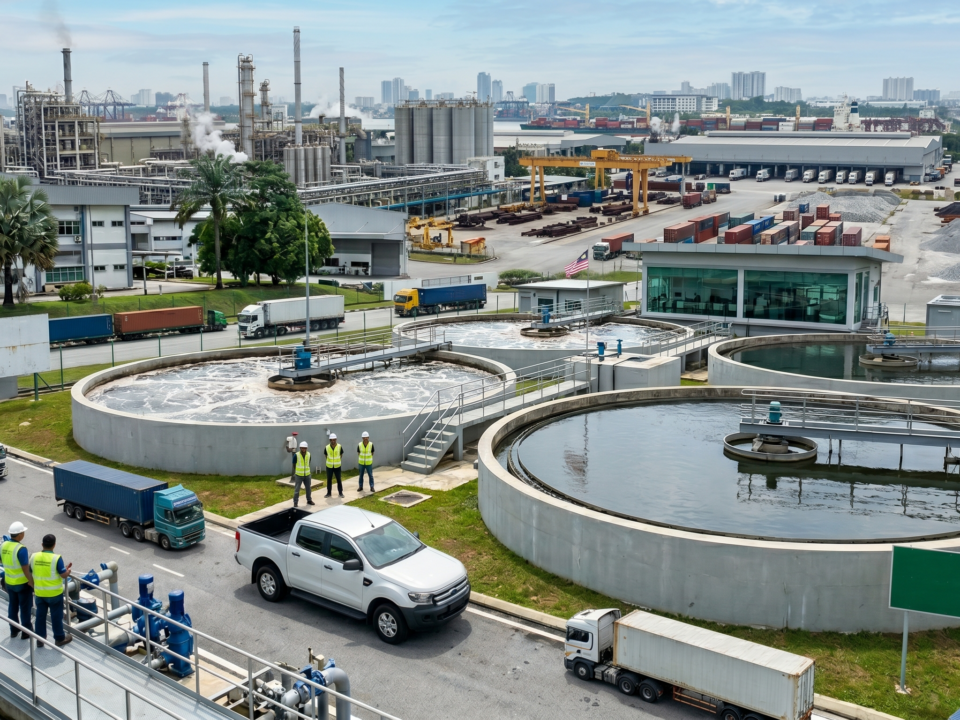
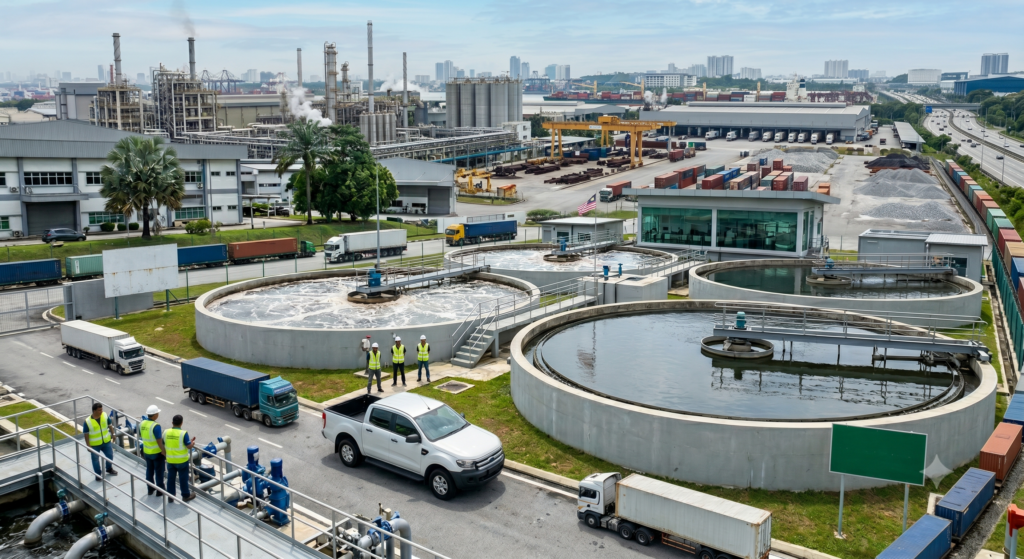
Achieving consistent treatment performance is never accidental. It requires discipline, data-driven monitoring, and a clear understanding of local operating conditions. In our experience, maintaining a sewage treatment plant in Malaysia for peak performance involves more than routine cleaning — it demands a structured strategy that combines process optimisation, equipment reliability, and regulatory awareness.
Establishing A Data-Driven Maintenance Regime
Every sewage treatment plant in Malaysia functions under different influent loads, climatic conditions, and population demands. Hence, relying on a fixed maintenance schedule is rarely sufficient. We establish data-driven regimes by collecting flow and quality readings daily, analysing historical patterns, and setting trigger thresholds. Parameters such as chemical oxygen demand (COD), suspended solids, and sludge volume index (SVI) guide our operational decisions. This analytical approach allows predictive interventions — for example, adjusting aeration intensity before oxygen levels drop or desilting tanks when solids accumulation trends upward.
Optimising Biological Process Stability
Microbial health sits at the heart of treatment efficiency. Temperature fluctuations and nutrient imbalance can compromise the activity of beneficial bacteria. To maintain optimal biological performance, we frequently test for food-to-microorganism (F/M) ratios and adjust return activated sludge (RAS) rates accordingly. For tropical facilities like a sewage treatment plant in Malaysia, higher ambient temperatures accelerate microbial metabolism, so oxygen demand and nutrient dosing must be carefully balanced. Regular microscopic examination of sludge flocs helps detect early signs of filamentous bulking or toxicity events before effluent quality deteriorates.
Proactive Equipment And Asset Management
Mechanical integrity defines plant reliability. We practise condition-based maintenance instead of waiting for breakdowns. Vibration sensors, infrared thermography, and oil analysis are used on blowers, pumps, and gearboxes to detect anomalies early. Bearings and impellers are inspected on rotation, while spare-part inventories are maintained based on failure probabilities rather than convenience. For any sewage treatment plant in Malaysia, humidity and corrosion are recurring threats — therefore, we employ protective coatings, desiccant breathers, and routine motor insulation testing to extend equipment lifespan.
Sludge Treatment And Hydraulic Balance
One overlooked factor affecting performance is poor sludge age management. Excess sludge increases oxygen consumption and reduces clarifier capacity. We monitor sludge retention time (SRT) and schedule wasting to keep biomass in its optimal growth phase. Dewatering units are maintained through polymer calibration, belt alignment, and periodic cleaning of filtrate lines. Maintaining hydraulic balance across equalisation, aeration, and sedimentation tanks prevents short-circuiting and ensures uniform treatment — an essential aspect for every sewage treatment plant in Malaysia handling fluctuating inflows from housing or industrial estates.
Instrument Calibration And SCADA Reliability
Automation only adds value when instruments are accurate. Flowmeters, pH probes, and dissolved-oxygen sensors are recalibrated monthly or after any cleaning event. We also conduct validation audits within our SCADA (Supervisory Control and Data Acquisition) systems to ensure alarms trigger correctly. For example, if an aeration blower fails, the system should immediately switch to standby mode while notifying the operator. In a sewage treatment plant in Malaysia, where downtime can quickly cause odour complaints, reliable instrumentation and automation are critical to consistent compliance.
Chemical And Energy Optimisation
Operational excellence also depends on controlling input costs. We evaluate polymer and chemical consumption per cubic metre of treated wastewater, adjusting doses through jar testing rather than fixed ratios. Energy audits reveal where fine-bubble diffusers, variable-speed drives, or improved air-distribution layouts can reduce kWh usage without compromising treatment. By integrating these practices, a sewage treatment plant in Malaysia can achieve both environmental and economic efficiency — maximising output while minimising footprint.
Workforce Competency And Safety Discipline
Even the most advanced technology fails without capable people. We implement structured competency matrices, ensuring that operators, electricians, and laboratory staff are trained and certified for their specific tasks. Safety is non-negotiable; confined-space entry, gas monitoring, and PPE compliance are part of daily routines. Knowledge-sharing sessions between plants promote innovation and reduce repetitive mistakes. Over time, this culture of professionalism keeps the sewage treatment plant in Malaysia running safely, efficiently, and sustainably.