
5 Essential Tips for Residential Septic Tank Maintenance and Plumbing Systems
June 22, 2026
Why Every Malaysian F&B Business Needs a Reliable Grease Trap & Wastewater Treatment Partner
July 7, 2026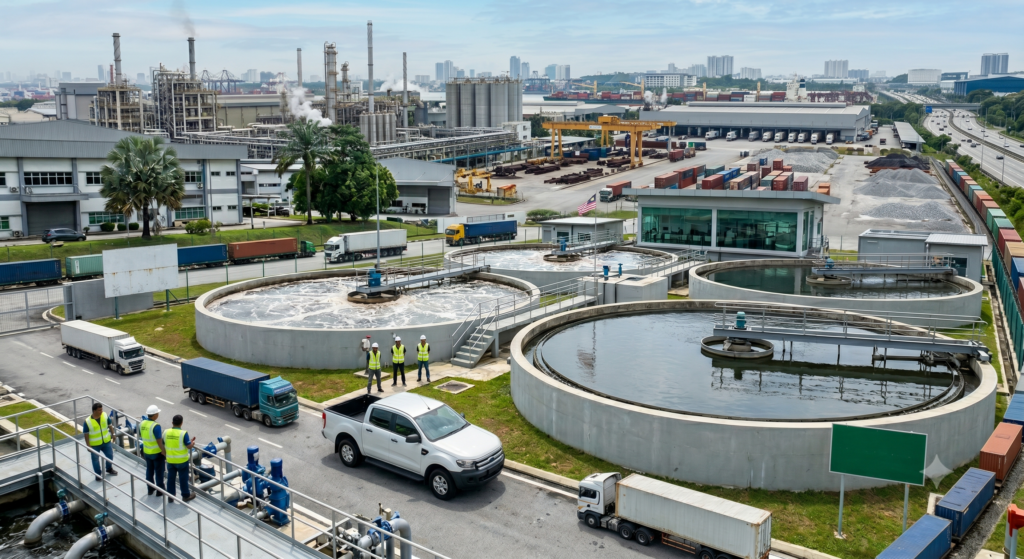
Unlike standard commercial or residential properties, industrial manufacturing and production facilities face immense pressure when managing wastewater. Industrial operations generate a complex mixture of domestic sewage from large workforces and highly concentrated industrial effluents from processing floors.
In Malaysia, discharging untreated wastewater isn't just an environmental hazard, it is a severe legal offense strictly monitored by the Department of Environment (DOE) under the Environmental Quality Act. To maintain smooth daily operations and avoid crippling regulatory fines, understanding how efficient industrial wastewater treatment and sewage systems function is an operational necessity.
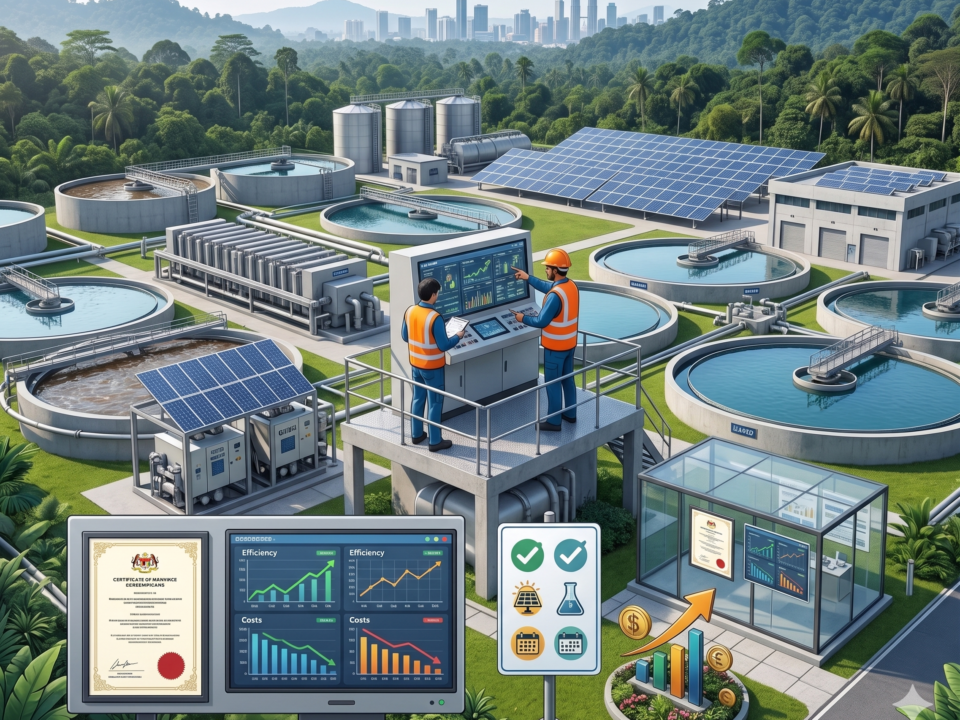
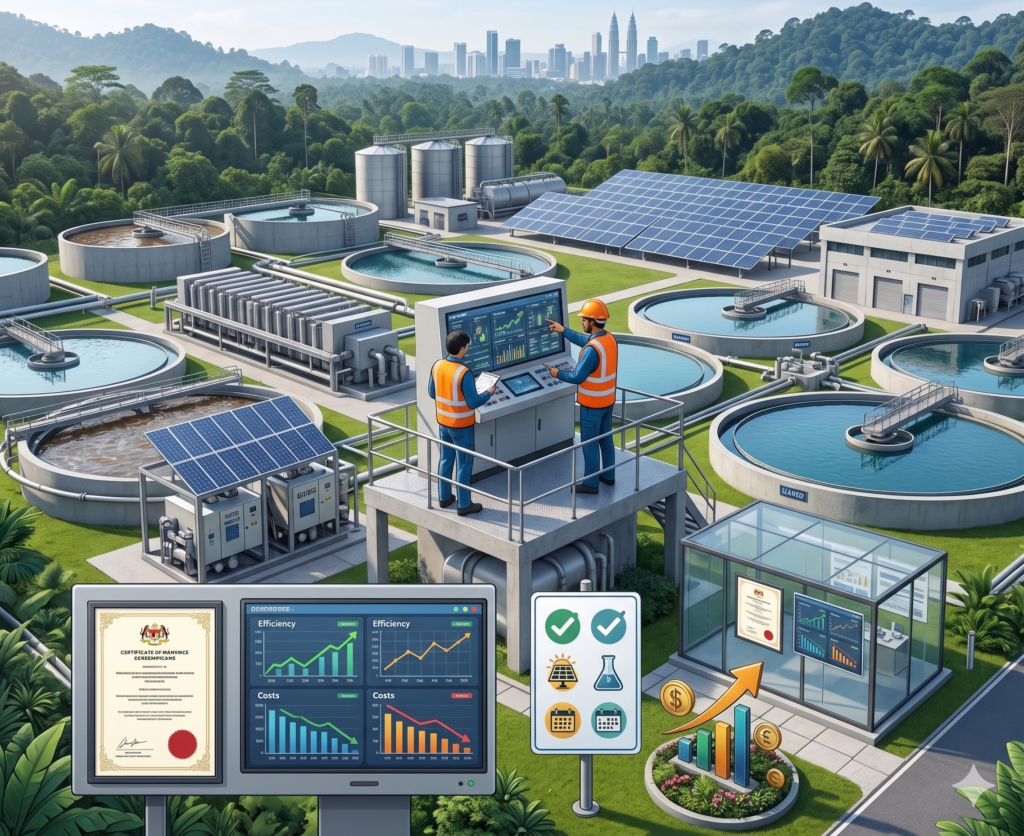
Here is an operational breakdown of how a modern, efficient industrial sewage treatment plant (STP) processes waste to protect your business and the local environment.
Phase 1: The Preliminary Treatment (Screening and Grit Removal)
The process begins the moment raw wastewater leaves the factory floor or staff facilities and enters the treatment plant.
Industrial sewage often contains large, solid debris, such as plastic packaging, rags, coarse sand, and other debris, that can easily clog heavy machinery or damage expensive downstream processing pumps. During the preliminary phase, wastewater passes through mechanical bar screens and grit chambers to trap and remove these large materials. This step is purely mechanical but absolutely vital for protecting the longevity of the entire plant architecture.
Phase 2: Primary Treatment (Sedimentation and Separation)
Once the large solids are filtered out, the remaining liquid flows into massive primary clarifiers or sedimentation tanks.
Here, the wastewater is held under completely calm conditions for several hours. This allows gravity to do the heavy lifting: heavy organic solids sink to the bottom of the tank to form primary sludge, while lighter materials such as leftover grease, oils, and scum float to the surface. Mechanical skimmers continuously sweep the surface to remove the oil layer, while bottom-scrapers collect the heavy sludge for separate treatment.
Phase 3: Secondary Biological Treatment (The Aeration Core)
This is the heart of industrial wastewater treatment and sewage optimization. The liquid exiting the primary clarifiers still contains dissolved organic matter that cannot be removed by simple gravity.
The wastewater is pumped into specialized aeration tanks, where compressed air is continuously injected into the liquid. This rich supply of oxygen fuels the rapid growth of naturally occurring aerobic microorganisms (frequently referred to as "activated sludge"). These helpful bacteria rapidly consume the dissolved organic pollutants, converting them into harmless cellular mass, carbon dioxide, and water.
Phase 4: Secondary Clarification & Final Disinfection
After thriving in the aeration tanks, the water flows into secondary clarifiers. Here, the micro-organisms and remaining biological clusters naturally clump together and settle to the bottom as secondary sludge.
The remaining water at the top is now crystal clear and free of major contaminants. Before this treated water can be legally discharged into public waterways or recycled back into factory cooling loops, it undergoes a final disinfection phase, typically utilizing chlorination or automated ultraviolet (UV) systems, to neutralize any remaining pathogens or microscopic biological matter.
The Critical Role of Scheduled STP Maintenance
An industrial treatment plant is a finely balanced mechanical and biological ecosystem. Industrial effluents vary constantly with production cycles, and a sudden surge in chemicals, heavy oils, or biological load can easily throw the entire system out of balance, killing off vital bacterial colonies or overwhelming mechanical filters. When a system fails or drops in efficiency, the penalties are severe:
- Regulatory Shutdowns: Failure to meet strict Environmental Quality (Industrial Effluent) Regulations can result in forced operational stoppages by the DOE.
- Corrosive Damage: Neglected sludge accumulation causes toxic gas build-ups that rapidly corrode internal piping and tank structures.
- Massive Financial Losses: Emergency structural repairs and localized clean-up costs are infinitely more expensive than systematic prevention.
Partner with Malaysia's Industrial Sewage Specialists
Maintaining continuous environmental compliance while keeping production lines running requires dedicated, expert oversight.
At Bersih Sewerage, we provide comprehensive, accredited sewage treatment plant maintenance specifically tailored to the unique demands of Malaysian industrial facilities. From routine mechanical servicing and biological health audits to emergency desludging and regulatory compliance testing, our engineering teams ensure your wastewater infrastructure operates at peak, legal efficiency.
Don't leave your operational compliance to chance. Contact the industrial team at Bersih Sewerage today to implement a comprehensive, worry-free system maintenance strategy.